
July 9, 2026
Eight Police Cars Swarm a Black Teen, Guns Drawn, Over a Bag of Chips. The AI That Called Them Is Coming to Schools Nationwide.
From Baltimore to Kansas, cities and states are pouring millions into militarized surveillance software for schools. An investigation into the AI that sent armed police after a Black teen holding a bag of Doritos.
By Zoey Howell-Brown

This story for The Kansas City Defender is supported by the Black Writers and Journalists Workshop’s Mini Grants – find out more about the project and apply here.
Sixteen-year-old Taki Allen was waiting for a ride home with friends after football practice at the entrance of Kenwood High School when he heard the sirens of eight Baltimore County police cars. Officers jumped out, guns drawn, ordering the young teen to drop to his knees and cuffing his hands behind his back. They said they were following up on the school’s AI gun detection system that had flagged a suspicious object he had held in his hand as a threat: a crumpled bag of Cool Ranch Dorito chips.
“No one wants this to happen to their child,” Allen’s grandfather told a local news station soon after the incident, which stirred residents as it conjured up not just fears of senseless police violence against Black youth but questions of accountability when school dependency on AI systems goes wrong.
As AI advances across the country, educators, parents and communities are debating whether schools should spend millions of dollars deploying new AI gun detection systems and if they should incorporate AI-based lessons in the classroom.
While many AI proponents in schools say artificial intelligence makes their jobs and lives easier, Allen’s story illustrates that AI systems in schools are built around the same existing institutional prejudice in our society and can potentially endanger the lives of students. Teachers and researchers also warn AI in the classroom creates a pattern of dependency on these technologies that are trained on racially biased datasets to research, to read, to interpret, solve problems and other skills that are paramount to student development.
How these AI systems in schools impact students, particularly Black children, has been less explored but experts from around the country are sounding the alarm about the potential harms and are urging policymakers to be proactive and set guardrails before a tragedy happens.
Omnilert, Evolv and Baltimore City
“Enforcement agencies like the Federal Trade Commission have been hollowed out and at the same time the administration has moved to restrain states from regulating AI at all, warning against state-level action and threatening preemption in the name of uniformity,” Baltimore City Councilman Mark Conway told a full room in the City Council in January 2026, a few months after Allen was ambushed.
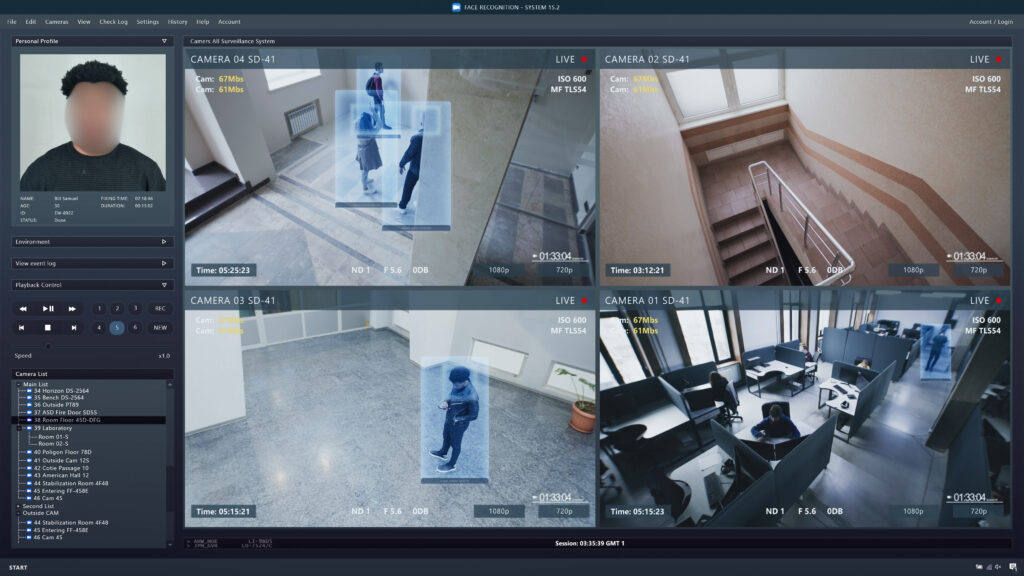
Baltimore City Council members held a hearing on the effectiveness of AI surveillance cameras by Evolv Technologies and Omnilert, two companies that partnered with local school districts to deploy gun detection systems. Omnilert’s detection system flagged the bag of chips in Kenwood High School as a threat.
Evolv Technologies, commissioned by Baltimore City School System and Omnilert, commissioned by Baltimore County Public Schools both received SAFETY act designation by the U.S. Department of Homeland Security in 2025 under U.S. President Donald Trump’s second term in office. This designation has opened up the market for security companies to sell and advertise their counterterrorism technologies to school districts, offering legal liability as they promote their products. Critics point out that this legal shield written for counterterrorism now covers the surveillance of children waiting for rides home after practice.
Considering the $5.5 million budget approved to implement Evolv’s metal detectors in Baltimore City Public Schools, City Council members expressed concern that the oversight was lacking on a federal level from the Trump administration.
“The consequence is that states are boxed out and municipalities are left on their own. Cities are expected to vet complex AI systems, assess safety claims, and protect the public interests without the tools, authority, or federal support that meaningful oversight requires,” Conway said in his statement during the hearing.
“That is the environment that our city school system has been forced to operate in. Educators and school administrators are doing their best to keep schools safe while also ensuring that schools remain welcoming, non-invasive, and non-discriminatory environments,” Conway added.
Chaz Arnett, a professor at the University of Maryland Carey School of Law, affiliated with the Center for Critical Race & Digital Studies, and a faculty fellow at Data & Society, echoed Conway’s sentiments saying local school districts are fending for themselves, though he said this does not absolve their accountability for making determinations to use these technologies.
He added he was disappointed with how local officials handled the situation, referencing an October 2025 media conference regarding the Kenwood High School incident:
“You had a Baltimore County superintendent speak to news reporters and basically say, …. ‘this technology worked the way that it was supposed to, right?’”… “It’s quite frankly insane to sort of wrestle with and process.”
The Kansas City Defender reached out to Baltimore County Superintendent Dr. Myriam Rogers but she has yet to respond to our request for comment.
Baltimore County Public Schools did not immediately return a Kansas City Defender request for comment.
Arnett said parents and communities are wrestling with the reality that there could be potential danger in schools, saying it is understandable that people want tech that can help in preventing a shooting at a school. But he added that for many people society has conditioned them to have “faith in the connection between digital surveillance and safety.”
“You had multiple exposés media articles, like detailing the mini incidents across the country where both Evolv and Omnilert had massive failures… and false alerts. So they had this information, prior to entering into these contracts and they still went forward with it .. So it raises a number of questions,” Arnett added.
For many people society has conditioned them to have “faith in the connection between digital surveillance and safety.”
Lawrence Grandpre, director of research at Leaders of a Beautiful Struggle, a think tank that consults legislators to implement people-centered policy, said linking public safety with surveillance technology is rooted in “wanting to desire a certain form of intense social control” in a context where local news networks highlight false narratives of criminality of Black youth in Baltimore.
“That vision of fake justice, of fake deterrence has this racialized belief that Black people are so innately violent that only extreme sentences and extreme investments and all forms of technological advances in policing” are what will reduce crime, Grandpre said.
The Kansas City Defender reached out to Evolv Technologies but the company has yet to respond to a request for comment.
Dr. Marzyeh Ghassemi, professor at Massachusetts Institute of Technology in Electrical Engineering & Computer Science, Institute for Medical Engineering & Science and Leader of MIT’s Healthy ML Research Group warned that communities can’t rely on tech alone to solve systemic problems.
“I think the problem is techno-solutionism. So this is a phrase that means we have very, very naive beliefs sometimes that difficult, complex social issues that are architected by decades or sometimes centuries of disparities; that those things can be solved by a machine learning system.”
AI Enters The Classroom Without Guardrails
While Ghassemi’s own projects focus on people-centered machine-learning models, she pointed to research that showed AI systems like large language models (Chat GPT, Gemini, Claude, etc) placed in environments where they are not required have the potential to inhibit creativity, or the ability to do one’s job; referencing a 2025 study by Lancet Gastroenterology and Hepatology that found declining detection rates across multiple endoscopists after a three-month period of using AI-assisted polyp detection for colonoscopies.
“AI doesn’t have to be like this, but this is the most profitable way to get engagement and so that’s the way it’s been designed,” she said.
“Incorporating these technologies and using them in the school system does further the school-to-prison pipeline,” Arnett said, referring to institutional biases that criminalize students, especially Black students, and contribute to America’s mass incarceration crisis. “The problem of technosolutionism is how we always reach for technologies as potential solutions to these big social problems,” he added.
The results can be detrimental without any oversight, especially in a classroom setting.
Tiera Tanksley and Brian Cabral at University of California-Los Angeles and University of Texas released a 2026 article published by MDPI’s Youth Journal that reported “AI technologies have the potential [to] restrict Black students’ access to high quality learning experiences and culturally relevant and racially just content; while expanding scope and scale of the school-prison apparatus”.
The article referenced AI image generators used in public schools that have been used to sexually harass and hyper-sexualize young girls, as well as generate false images of people of color as Nazis and slave owners.
Ghassemi told the Kansas City Defender that when AI systems use historical datasets that reflect procedural or systemic biases, it is unsurprising to find that harmful results would impact marginalized groups.
“The problem of technosolutionism is how we always reach for technologies as potential solutions to these big social problems”
“It’s not a surprise that we see, for example, facial recognition systems disproportionately failing on all Black people, but Black women disproportionately more,” said Ghassemi. “It’s not a surprise that we see machine learning algorithms disproportionately failing in healthcare settings on minorities or people who have chronic health conditions or who are on or underinsured.”
Dr. Ghassemi says that current ML/AI models determine facts or make an automated decision by using pre-existing data, collected en masse, “But what that ignores is that this combination of data selection bias, where specific groups are funneled into dangerous, negative, harmful situations disproportionately more,” she added.
Arnett told the Kansas City Defender that AI is also envisioned as part of a political economic project by some of its leading proponents, referencing a recent interview with Palantir CEO Alex Karp that emphasized AI will only be disruptive to Democratic voters and women, while being a boon for working-class males, which many media commentators interpreted as a racist dog whistle.
“He’s essentially selling AI as a liberator in many ways for the working class white male … Those Republicans, I suppose, right? And with that, you see this sort of racialized ideology, this sort of ethnos … In ways that should be raising red flags for everyone,” he said.
Grandpre says that using AI could be a beneficial tool for finding information on abandoned or foreclosed housing in Baltimore, but added he believed there were white supremacist undertones in current AI models that mimic an overseer dynamic between users and automated systems.
“So AI is really built upon a worldview that sees its fake technological objectivity as justification why we have to defer to companies, not regulate them,” he added. “[This] allows them to produce technology that says all Black kids chip bags [are] guns because if that’s what AI says, then it’s smarter than we are.”
“And so we have to ‘bow down before AI’ because it’s being sold as objective and rational and the most objective and most rational [when it] really is just processing data produced by non-objective humans.”
New Policies Emerge to Combat Algorithmic Bias
The Trump administration’s Executive Order 14365 seeks to block states from regulating AI. A state can be considered non-compliant of this order, if states choose to implement AI regulation laws. As a consequence for non-compliance, the administration threatens to withhold distribution of the $42 billion Broadband Equity and Access Deployment fund, which supports free wi-fi and devices to low income communities. Despite the pushback, legislators from both parties are currently creating new policies that offer user protections.
So far, five states, Texas, New York, Colorado, Utah, and California, have officially signed bills in AI regulation, according to the International Association of Privacy Professionals AI Governance Legislation Tracker in an effort to use state policy to hold companies accountable, though this may not be an easy process.
Colorado’s pioneering Colorado Artificial Intelligence Act (CAIA) was the first comprehensive AI anti-discrimination law and it took effect earlier this year. This law mandates that developers and deployers of high-risk AI systems use reasonable care to prevent algorithmic discrimination in critical decision making. As of April 2026, xAI and the federal government has filed a lawsuit against the state to challenge the CAIA, with claims that this law is unconstitutional and violates the 14th Amendment. Assistant Attorney General Harmeet K. Dhillon of the Justice Department’s Civil Rights Division said in a statement “The Justice Department will not stand on the sidelines while states such as Colorado coerce our nation’s technological innovators into producing harmful products that advance a radical, far-left worldview.”
In May 2026, after the Justice Department’s intervention, the Colorado Senate passed SB 189, a bill to revise the CAIA and remove three protections requiring companies to: prevent facial recognition bias, create risk management programs, and conduct algorithmic impact assessments. SB 189 is anticipated to be finalized January 1, 2027.
AI regulation advocates have also highlighted how state data privacy laws are being used to keep companies and institutions that use AI in decision making accountable. The following 21 states have data privacy policies or laws that can be used to hold accountable businesses that develop biased AI systems with automated decision making technology, according to Orrick U.S. AI State Law Tracker.
The technology that sent eight police cars after Taki Allen is being subsidized into classrooms a thousand miles away. In January, Kansas Attorney General Kris Kobach opened a $10 million grant program to install ZeroEyes AI gun detection software in schools across the state, after the company spent two years lobbying the Kansas Legislature for the contract. By the company’s own admission, the software cannot detect a concealed weapon. What it can detect, as Allen learned, is a Black child holding a bag of chips. The resolution to this issue will require human intervention in the form of collective care and empathy.
Dr. Ghassemi told the Kansas City Defender that society needs to look at the inequalities that are pressuring local institutions like schools and hospitals to use these devices and direct more resources to support staff and communities.
“We as a society need to decide we don’t want to give large tech companies, frontier AI labs, billions of our tax dollars, tax breaks and energy guarantees. Instead, we want to send those funds to schools and health care centers,” she said.
Grandpre said public safety is about really investing in a school environment where “there’s enough connective tissue of trusted adults who are not police” to check on young people.
“Check on them if they’re having the beef; check on them if they miss school because it’s like if someone’s getting bullied, that’s when they might bring a gun, but you need to know if someone’s getting bullied to intervene before they carry the gun. That’s what we really want.”
Edited by Aurora Ellis and Ryan Sorrell
Zoey Howell-Brown is a freelance technology reporter, community organizer, visual art instructor and award-winning arts administrator, acknowledged by the City of Baltimore in 2018. Their work has been featured in Broadband Breakfast, a D.C. news organization focused on tech, broadband and the internet, as well as The Real News Network, and Georgetown University via the Center for Security and Emerging Technology.