
March 2, 2026
From Resilience to Climate Sovereignty: Black Women Create Community-Led Solutions
From the Gulf Coast to the Sahel, they’re turning to science and community power to build futures rooted in dignity and care.
This story for The Baltimore Times is supported by the Black Writers and Journalists Workshop’s Mini Grants – find out more about the project and apply here.
Growing up in the Bahamas, Adelle Thomas remembers huddling in her childhood home with her sisters as the rain and wind of Hurricane Andrew battered their house and tore through their neighborhood in 1992. Their grandmother, a nurse, was still required to be at work, so the sisters found refuge where they could, spending the night sheltering alone in the bathroom just to wake up the next morning to a landscape of destruction.
“Hurricanes were part of my life,” Dr. Thomas said. “It was Black and brown communities most exposed, least resourced, and left waiting for help. That is what shapes my work. Climate change doesn’t affect everyone equally.”
This early experience was a turning point for Thomas, now a senior scientist and a policy strategist whose work centers on climate and race injustice. She has spent nearly two decades documenting how disasters deepen colonial debt and strip away far more than buildings for Black communities in the Caribbean on the economic and social periphery who are often forced to leave their homes.
“It’s so important that we center these non-economic losses when we talk about the impacts of climate change because they go beyond just the dollars of damages to infrastructure, which is what tends to dominate the headlines,” she told The Baltimore Times.
“It’s these intangible non-economic impacts that “have such lasting impacts on people, on their spirits, on their wanting to continue to live in a place,” she said, adding these losses affect generations of people who are separated from places that carry profound cultural and historical meaning.
Black women, in particular, are among the first to absorb these harms and the least supported. Yet, they are leading some of the most innovative climate responses: rerouting climate finance, defending land and water, designing community-centered adaptation, and generating science and policy from the ground up.
As a vice chair on the UN’s climate assessment panel, Thomas is a part of a new generation of Black women from Alabama to St. Martin to the Bahamas and Burkina Faso, helping to shape how governments understand loss, adaptation and recovery.
Shared Histories, Reparations and Reckonings
Industrial empires exploited enslaved Black labor to bolster plantation and mining economies that deforested large tracts of arable land and polluted the skies, waterways and rivers. Today, these economies are now turning further towards carbon-intensive and digital markets that demand enormous energy and water from the very regions already destabilized by climate change.
In historically disenfranchised regions of the Global South, multinational companies continue to extract natural resources to fuel wealth accumulation across financial centers in the Global North, often leaving former colonies dependent on loans for infrastructure development and climate recovery responses.
While many creditors have advocated new climate commitments, temporary debt suspensions and concessional lending, these initiatives are often limited in scale or slow to implement.
“We need climate finance that actually recognizes the injustices that put countries in the position they are in now,” Dr. Thomas said, pointing to how carbon emissions have largely come from rich countries and former colonial powers. “That means debt forgiveness and restructuring, not loans that deepen the harm.”
The Bridgetown Initiative, a 2022 proposal by Barbados Prime Minister Mia Amor Mottley, says that recovery cannot be built on debt, and instead it calls for expanding affordable finance towards local climate solutions, debt restructuring and policies on lowering carbon emissions.
Dr. Lysanne Charles, a queer feminist and womanist sociologist from the Dutch Caribbean has spent years listening to local communities, students and faculty as they wrestle with questions around resilience in the face of climate change.
“Global South countries that have had so much extracted from them and continue to have so much extracted from them are expected to perform resilience,” she said, adding that many communities are fatigued by the idea of being ever resilient.
“I think about the islands in terms of trying to negotiate polycrises,” said Charles, the first doctoral researcher at the University of St. Martin, studying climate change policy and adaptation adaption, describing it as a “broader conversation across Africa and the [African] diaspora around tackling both climate and capitalism and the legacies of colonialism.”
Instead of resilience, she says, we should ask “What does it mean to move from resilience to transformative societies in which we’re actively always thinking with and through moving beyond survival?”
“We have to move from resilience to transformation toward systems that center care, community, and slowing down,” she said.
From the U.S. South to Global South
“We have a lot of beautiful resources, but we do not have very good environmental protections in the state of Alabama,” said Dr. Kenya Goodson, president of the board of directors of the Cahaba River Society, a nonprofit dedicated to restoring and protecting the Cahaba River watershed in the state.
She described how the 2011 super tornado in Tuscaloosa led to the deaths of more than 50 people, including children – a moment she defined as a pivotal turning point. As the first Black woman to earn a Ph.D. in Civil Engineering from The University of Alabama, she works to expose how wastewater failures, toxic runoff, and underfunded infrastructure endanger predominantly Black rural communities from Lowndes County to the Gulf Coast.
But on a 2024 trip to the Caribbean island of Suriname for a Fulbright research project, Goodson saw the same dynamics at play.
“[Suriname] reminded me a lot of Alabama, the beauty and the nature but also the issues with infrastructure…food justice, sustainable agricultural practices, all of those things are going to be solutions for our tomorrow. That’s a global issue.”
Her approach to climate research centers community expertise: “Setting the community up as being experts is key,” she said.
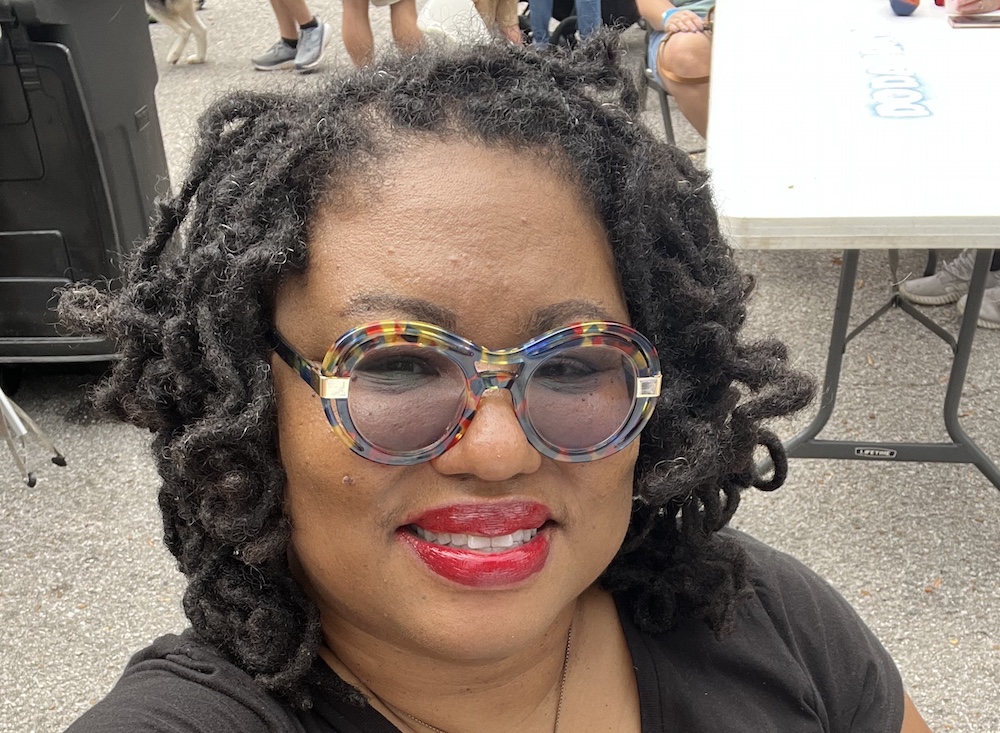
Goodson helps residents collect evidence and data, press for protections and accountability, and co-design equitable water and climate resilience systems through field studies and public scholarship.
“People want to be heard. They want their stories to be shared,” she said. “Research is about giving people the platform to share their experiences and have it backed up with data.”
Across the ocean, in Burkina Faso and throughout West Africa, migration from climate disasters – including droughts and floods – is an everyday reality.
Like Goodson, Dr. Safiétou Sanfo, an agricultural economist at the University of Thomas Sankara, uses community-led knowledge from Africa when researching climate migration. She emphasizes what she calls climate sovereignty, describing it as “the right and capacity of African people to define, design, and drive their own climate responses [that] is rooted in indigenous knowledge, local priorities and economic self-determination for climate adaptation strategies.”
“Communities are not waiting to be included in climate work,” she said, pointing to examples across West Africa from farmers who use water harvesting and supplemental irrigation to younger generations choosing to migrate.
“They are actively redefining themselves. They demonstrate that expertise is not limited to universities, labs, or ministries, but it’s rooted in deep ecological memories, livelihood strategies, [and] collective governance traditions.”
Also a senior scientist and impact analyst at the West African Science Service Centre on Climate Change and Adapted Land Use Competence Centre, she aims to establish a hub where scholars, policymakers, communities can collaborate to understand and address the challenges of climate change livelihood, conflict and migration.
She emphasized that sovereignty for Black communities means climate finance should be decentralized. “We need to redirect at least a certain percentage of climate funds to locally led initiatives through community managed green funds and participatory budgeting at district or village levels,” she added.
Some Black women funders are already showing what decentralized climate finance can look like. The Caribbean Feminist Climate Justice Movement, the Clara Lionel Foundation, and the Hive Fund for Climate and Gender Justice are directing resources to grassroots adaptation projects. Their investments help close long-standing funding gaps for Afro-descendant, Indigenous, and locally rooted women’s organizations. In U.S. cities, leaders like Brandi Colander, CEO of the DC Green Bank, are pushing similar shifts by expanding community energy and climate-resilience infrastructure in historically disinvested Black neighborhoods.
Black women are not waiting for permission to shape the future. They are already building it through work that goes beyond day-to-day survival and towards community-powered solutions.
“Climate sovereignty is at the heart of a just and equitable climate future for Africa and the rest of the world,” Sanfo said.
Nana Afua Yeboaa Brantuo, Ph.D. is a writer and scholar-practitioner who reports on race, gender, politics, with a focus on social public policy. Her work draws on interviews, research, and data to examine how policies shape everyday life. Her writing has appeared in Essence, The Hill, PBS NewsHour, and OkayAfrica. She was born and raised in the Washington, D.C. metropolitan region, where she is currently based.
Lead Editor: Aurora Ellis
Contributing Editor: Meryleen Mena
The Black Writers and Journalists’ Workshop is a small volunteer-run, donation-based project designed to train and support emerging authors and editors. Our mission is to educate and inform Black audiences, the general public and policymakers, publishing vibrant, deeply reported stories reflecting the everyday lives and realities of African Americans and Black diaspora communities.